
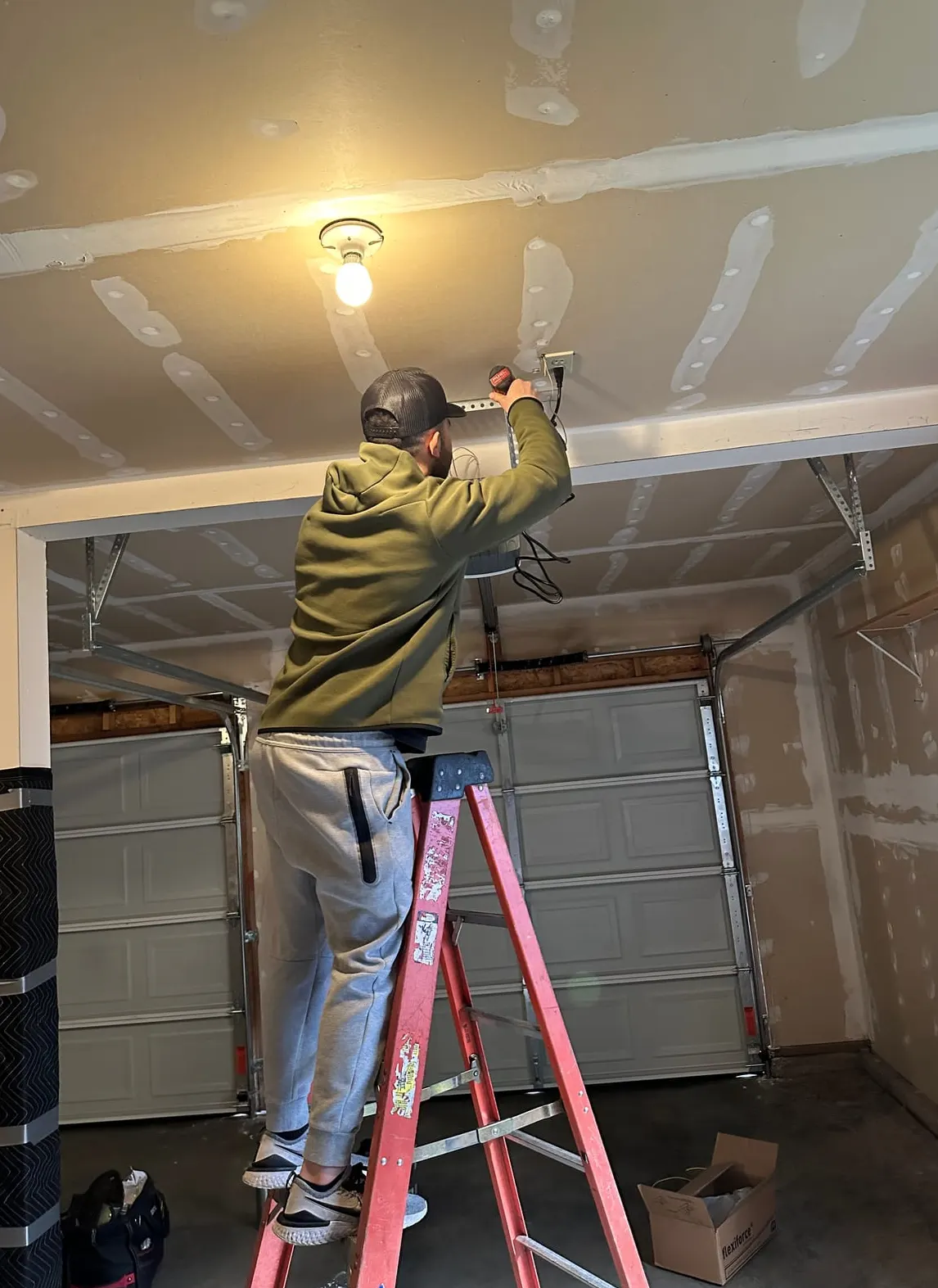
What a Technician Usually Finds on These Calls
The call almost always sounds the same: "My garage door won't close, it just goes down a few inches and comes back up." Sometimes it's "the light on the opener is blinking and I can't figure out why." When a technician gets out to the garage, the first thing they check isn't the motor or the springs — it's the two small sensor eyes mounted near the floor on either side of the door track.
More often than not, the fix takes two minutes: a smear of lawn mud on one lens, a spider web stretched across the beam, or a bracket that's been bumped just enough to throw off the alignment. The homeowner is relieved it wasn't expensive, but surprised that something so minor could stop a several-hundred-pound door in its tracks. That's actually the system working exactly as designed.
What Photo-Eye Sensors Actually Do
The two sensors — one with a steady LED, one that blinks or glows depending on brand — sit a few inches off the garage floor and shoot an invisible infrared beam across the opening. As long as that beam is unbroken, the opener will close the door normally. If something crosses the beam while the door is closing — a child, a pet, a cooler left in the path, a bike leaning the wrong way — the sensors tell the opener to stop and reverse immediately.
This feature became standard on residential openers because closing garage doors used to cause serious injuries and deaths, particularly to small children and pets who couldn't get out of the way in time. It's not a convenience feature. It's the single most important safety system on the door besides the springs and cables themselves.
Why These Sensors Misbehave So Much in This Area
Photo eyes are simple, but they're also exposed to everything that comes through an open garage door, and Gainesville's climate gives them plenty to deal with:
- Humidity and condensation: Warm, moist air settling on a cool lens overnight can fog it just enough to scatter the beam, especially after a cold front moves through.
- Afternoon downpours: Wind-driven rain during a summer storm can splash mud, pollen, and grass clippings onto the lenses, which sit low enough to catch ground-level spray.
- Insects and spiders: Humid, buggy conditions mean spider webs and wasp nests build up fast in the small gap between the sensor and its bracket, and a single strand across the lens is enough to interfere with the beam.
- Panel swelling: Wood and composite doors that absorb moisture can swell slightly, shifting the track just enough to nudge a sensor bracket out of true alignment over time.
- Yard equipment and storage: Bikes, mowers, and trash cans parked in the garage get bumped against the brackets more than people realize, especially in garages doing double duty as storage during hurricane season prep.
How to Clean and Align Them Yourself
Before assuming the worst, most sensor issues can be ruled out or fixed in under ten minutes:
- Power down first. Unplug the opener or shut off power at the breaker before touching anything near the sensors.
- Wipe the lenses. Use a soft, dry microfiber cloth — not a paper towel, which can scratch the lens — to clear dust, pollen, cobwebs, or water spots from both sensors.
- Check the brackets. Gently see if either sensor wobbles or has been knocked off its mounting. Even a slight tilt can misalign the beam enough to cause intermittent reversing.
- Realign if needed. Most sensors have a small range of adjustment at the bracket. Loosen the wing nut or screw slightly, aim both sensors so the LEDs face each other directly, and tighten once the indicator light goes solid.
- Clear the path. Walk the width of the door at sensor height and remove anything — a broom, a cooler, a dog bed — that might be breaking the beam without you noticing.
- Restore power and test. Run the door through a full close cycle and watch it closely rather than walking away.
If the lights are solid, the lenses are clean, and the door still won't close or reverses randomly, the wiring, the sensor units themselves, or the circuit board in the opener may be the real issue — and that's worth having inspected rather than guessed at.
Why You Should Never Bypass Them
Some older openers, and a surprising number of DIY videos, show ways to jump the sensor wires so the door closes regardless of whether the beam is broken. This removes the one system standing between a closing door and a child, pet, or adult who can't react in time. A bypassed sensor won't stop for anything — not a toddler chasing a ball into the garage, not a dog darting through, not a person bending down to pick something up. Once disabled, there's no warning and no second chance. If a technician ever finds sensors bypassed or disconnected, reconnecting them correctly is one of the first things they'll insist on, regardless of what else brought them out to the house.
When to Call Gainesville Garage Door
If you've cleaned and realigned the sensors and the door still reverses, won't close, or the opener light behaves erratically, it's time to call in a technician rather than keep adjusting brackets by trial and error. Gainesville Garage Door handles Garage Door Opener Repair & Installation calls like this regularly, checking the sensor wiring, the opener's logic board, and the overall door balance in one visit — since a door that's out of balance can also confuse the sensors by closing unevenly. We also fold sensor checks into routine Garage Door Maintenance visits, so small alignment issues get caught before they turn into a door that won't close at all.
If your garage door sensors are acting up, give Gainesville Garage Door a call — we serve homeowners throughout Gainesville, Alachua, Newberry, High Springs, Archer, Micanopy, Hawthorne, and Waldo, and we're ready to get your door working safely again.