
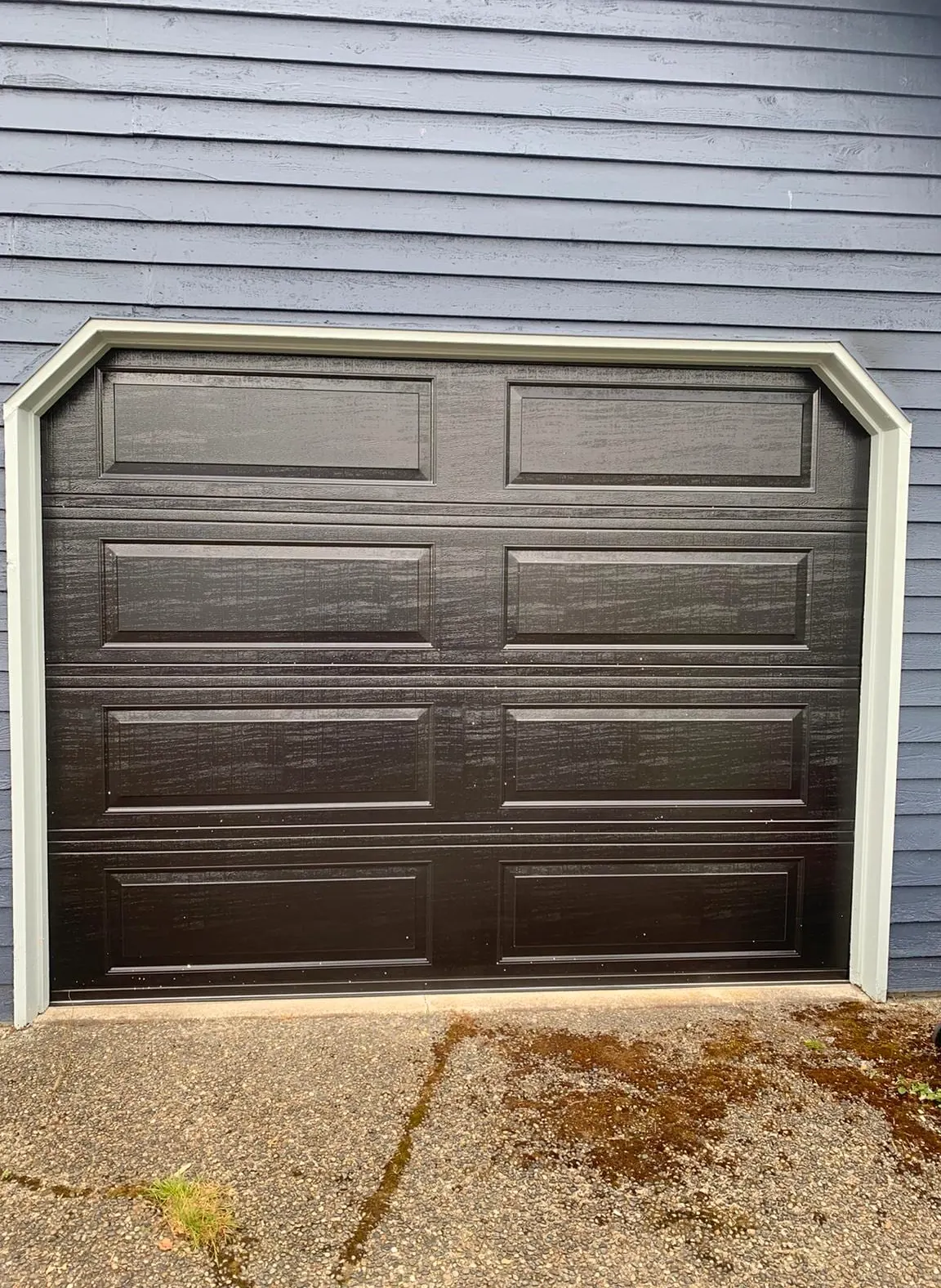
The Moment You Notice It
You're pulling into the driveway after one of those sudden afternoon downpours, and the garage door doesn't sit flush anymore. Maybe a wood panel has swollen just enough to catch on the frame. Maybe there's a line of rust blooming along the bottom steel panel where water pools after every storm. Or the aluminum door that looked so sleek two years ago now has a dent from a stray branch that a heavier material would have shrugged off. That's usually the moment homeowners start actually thinking about what their garage door is made of.
Material matters more here than in drier, milder climates. Between the humidity, the heat, the wind-load requirements for storm season, and the occasional salt air drifting inland, Gainesville homes ask more of a garage door than the national average. Here's how the common materials actually perform.
Steel
Steel is the default for a reason. It's strong, holds up well under wind-load pressure, and in insulated versions (two or three layers with a polyurethane or polystyrene core) it resists the heat transfer that can turn an attached garage into an oven by July.
- Strengths: durable, widely available, good wind resistance, low maintenance, wide price range from budget to high-end.
- Weaknesses: can rust if the finish is scratched or chipped and not touched up, especially at the bottom panel where water sits after heavy rain. Dents don't pop back out like wood can sometimes be sanded and patched.
For most homes here, a quality insulated steel door with a factory rust-resistant coating is the safest bet.
Wood
Wood doors are beautiful, and nothing else quite matches that custom, high-end look. But Gainesville's humidity is unkind to wood. Panels absorb moisture during the wet season and swell, then dry out and contract, which over time causes warping, sticking, and gaps around the edges where the door meets the frame.
- Strengths: unmatched curb appeal, can be refinished and repaired in sections.
- Weaknesses: needs regular sealing and repainting to resist moisture, heavier (which stresses springs and openers more), higher long-term maintenance.
Wood can work, but only if the owner is committed to real upkeep: resealing exposed edges, repainting on a schedule, and catching swelling early before it becomes warping.
Aluminum
Aluminum doors are light, which is appealing for very large doors or for reducing strain on an aging opener. They don't rust the way steel can, which makes them popular in coastal areas where salt air is a bigger factor.
- Strengths: rust-resistant, lightweight, good for oversized doors.
- Weaknesses: dents easily, less rigid under wind load unless reinforced, can feel less secure.
For homes closer to the coast with salt air exposure, aluminum has real advantages. For most of Alachua County, it's a reasonable but less durable choice than steel.
Fiberglass
Fiberglass doors are built around a steel or aluminum frame with a fiberglass skin, often molded to mimic the look of wood. They resist moisture and don't rust, dent, or warp the way their steel or wood counterparts can.
- Strengths: very resistant to humidity and salt air, holds paint well, low maintenance, good option for anyone who wants the wood look without the wood problems.
- Weaknesses: can crack or shatter on hard impact, especially in cooler temperatures (less of a concern here), generally pricier.
This is an underrated choice for Gainesville's climate specifically because it shrugs off the humidity swings that cause so many wood and steel issues.
Composite
Composite doors combine a steel skeleton with a composite or wood-fiber overlay, aiming for the wood look with better weather resistance. They're a middle ground.
- Strengths: resists swelling and warping better than solid wood, decent insulation values, lower maintenance than wood.
- Weaknesses: quality varies a lot by manufacturer, generally costs more than basic steel.
The Trade-Offs, Side by Side
- Best overall value for typical homes: insulated steel with a quality rust-resistant finish.
- Best for curb appeal with upkeep accepted: wood or composite.
- Best for salt air or lighter-weight needs: aluminum.
- Best for humidity resistance without sacrificing the wood look: fiberglass.
What We'd Recommend for Most Gainesville Homes
For the typical single-family home in this area, a two- or three-layer insulated steel door with a factory-applied rust-resistant coating offers the best balance of wind-load performance, humidity resistance, and long-term cost. Homeowners who want the wood look without the maintenance headaches should look closely at fiberglass or composite options instead of solid wood.
When to Call Gainesville Garage Door
If you're seeing swelling, rust spots, or a door that no longer closes flush, it's worth having it looked at before the next storm season rather than after a failure. Our team handles Garage Door Installation for homeowners replacing a door that's no longer holding up to the climate, and Garage Door Maintenance for those who want to extend the life of the door they already have. We'll walk you through which material actually fits your home, your budget, and Gainesville's weather.
Call Gainesville Garage Door today for an honest assessment and a door built for Gainesville, FL weather.