
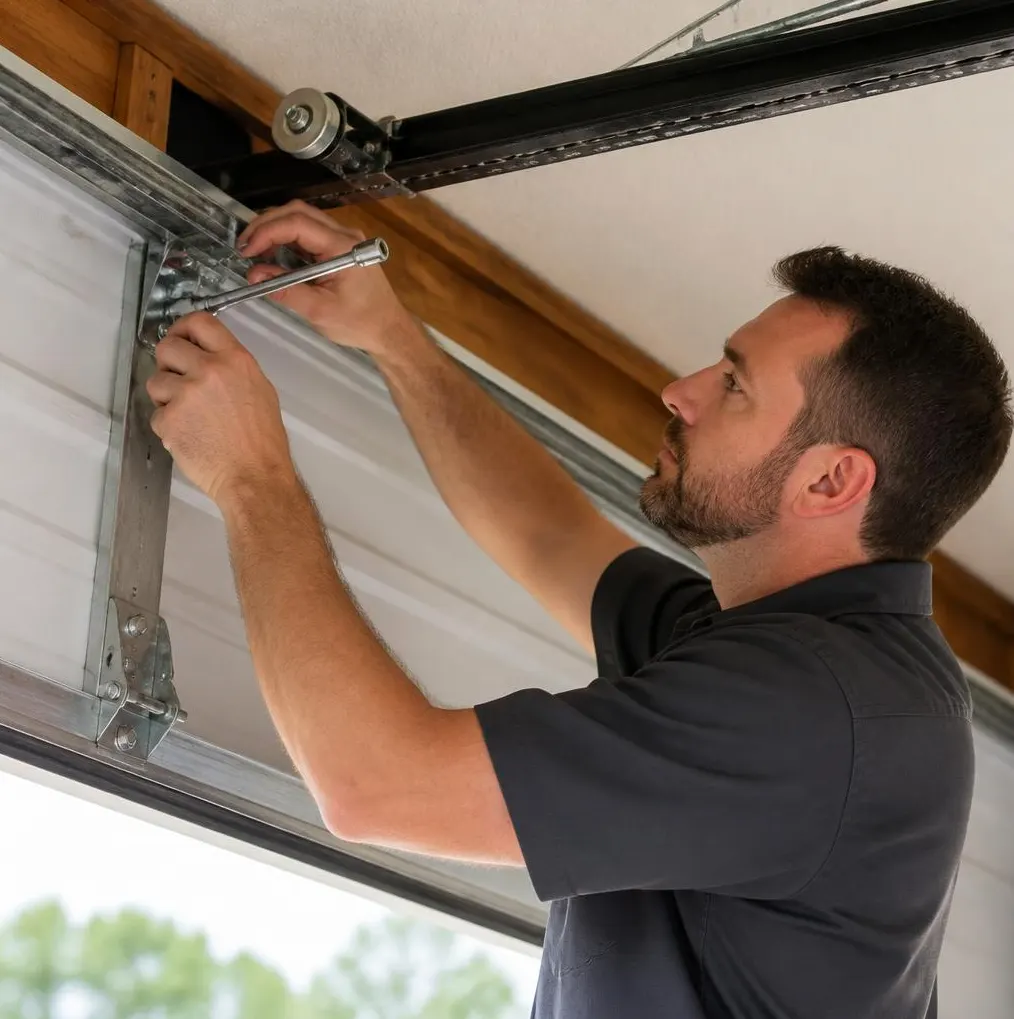
What We See on a Typical Spring Call
Most spring calls start the same way: a homeowner says the door was fine yesterday and today it's either stuck halfway or slammed down on its own. When we get there, the spring usually tells the real story — it didn't fail overnight. There's a gap in the coils, flaking rust along the metal, or the door has been sagging on one side for weeks and nobody noticed until the cable finally gave out. After a summer of heat, humidity, and afternoon storms rolling through, garage door springs take a beating most owners never see, because the spring sits up near the ceiling or along the track where nobody looks until something breaks.
The good news is that springs almost always show signs before they snap. You just have to know where to look and what you're looking at.
First, Know Which Type You Have
Open your garage and look straight up. If you see a single metal shaft running across the top of the door with one or two tightly wound springs on it, you have torsion springs. If instead you see long springs stretched out along the horizontal tracks on either side of the door, those are extension springs. The checklist below covers both, since they wear differently but share some of the same warning signs.
Walk Your Garage With This Checklist
- Visible gap in the coils (torsion springs): Healthy torsion springs sit with their coils touching tightly along the shaft. If you see a noticeable gap or separation between coils — even a quarter inch — that's a sign the spring has lost tension or developed a stress point. A spring in this condition can fail the next time the door cycles.
- Rust or flaking on the coil surface: Humidity and moisture that work into a garage during storm season settle on bare metal. Light surface rust on its own isn't an emergency, but rust that's flaking off or has created pitting in the coil weakens the metal from the inside. A pitted spring under tension is far more likely to snap than one with clean metal.
- The door feels noticeably heavier when lifted by hand: Disconnect the opener (pull the red release cord) and lift the door manually a foot or two. It should feel balanced and lift with moderate, even effort. If it feels like dead weight or fights you the whole way, the springs are no longer carrying their share of the load.
- The door hangs crooked or closes unevenly: With two torsion springs, or extension springs on both sides, one losing tension before the other causes the door to tilt or rack as it moves. Stand back and watch a full cycle — if one corner drops faster or the door looks off-level at any point, a spring is wearing unevenly.
- A loud bang, pop, or metallic snap during operation: Sometimes a spring doesn't fail cleanly; it gives a partial crack first. If you've heard a loud noise from the garage with no obvious cause, treat it as a warning, not a one-time fluke. Inspect the spring before using the door again.
- Visible stretching or separated coils on extension springs: Unlike torsion springs, extension springs run with the coils close together even at rest. If you notice a section where the coils have pulled apart or the spring looks longer than its matching spring on the other side, it's stretched past its working range.
- The opener runs longer or strains to lift the door: Listen to the motor. If it sounds like it's working harder than it used to, or the door takes noticeably longer to open, the opener is compensating for a spring that's no longer doing its job. This also shortens the life of the opener itself.
- Age and cycle count: Standard springs are rated for a set number of open-close cycles, often in the 10,000–15,000 range depending on the spring. A door used several times a day reaches that number faster than most owners expect. If you don't know how old your springs are and the house is more than seven or eight years old, assume you're due for an inspection.
Why This Matters More Here Than in Drier Climates
Gainesville's combination of heat, humidity, and sudden afternoon downpours is hard on exposed metal. Garages here swing between hot, swollen air during the day and cooler, damp conditions overnight, and that cycle accelerates rust formation on springs that aren't coated or maintained. Wood and metal door panels also expand and contract with moisture, which changes the load the springs are carrying slightly over time. None of this means your springs are destined to fail early — it just means a seasonal visual check matters more here than it would in a dry climate.
When to Call Gainesville Garage Door
If you've gone through this checklist and found a gap in the coils, visible rust pitting, a door that feels unbalanced, or you simply don't know how old your springs are, it's time to have a technician look before it becomes a same-day emergency. Our Spring Replacement service includes checking both springs as a pair (even if only one looks bad, since they wear on a similar timeline) and setting proper tension so the door lifts evenly. If you'd rather catch problems early every year, our Garage Door Maintenance visits cover spring inspection along with cables, rollers, and hardware that take the same seasonal wear.
If any of these signs sound familiar, give Gainesville Garage Door a call. We serve homeowners throughout Gainesville, Alachua, Newberry, High Springs, Archer, Micanopy, Hawthorne, and Waldo, and we'd rather replace a worn spring on our schedule than respond to a broken one on yours.