
The short answer
Yes, it's a big deal. A frayed cable is not a cosmetic issue you can put off until next spring, and a loud, grinding roller is not "just how old doors sound." Both are warning signs that parts holding up a 100-150 pound door are wearing out. Cables don't usually fail gradually and give you a clean warning — they fray, then they snap, often while the door is moving. That's the argument settled. Now here's why.
What's actually happening inside your garage door
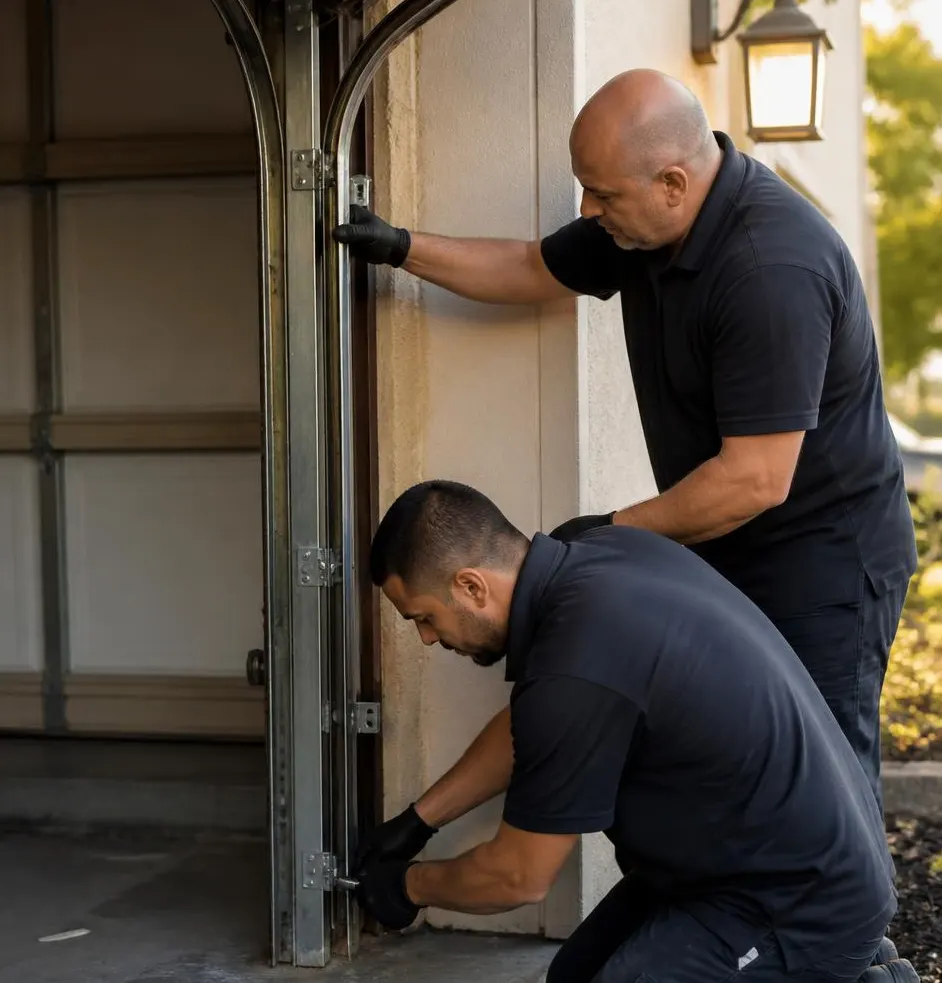
A standard garage door doesn't just sit there — it's held up by a spring system (torsion or extension) that does almost all the lifting work, with cables that run from the bottom corners of the door up to a drum near the spring. Rollers are the small wheels that ride in the tracks and let the door glide up and down smoothly.
When a cable frays, you'll usually see small wire strands poking out, a shiny groove worn into the drum, or the cable sitting unevenly on one side compared to the other. When rollers wear out, they often get flat spots, crack, or start to wobble in the track, which is what produces that rhythmic thunk-thunk-thunk or grinding sound as the door moves.
Why this matters more than it sounds like it should
- Cables are under constant tension. They're holding back spring force every time the door is closed. A frayed cable under that kind of load doesn't fail quietly — it can snap suddenly, letting one side of the door drop.
- A dropped door is a safety hazard, not just an inconvenience. A door that falls unevenly can jump the track, bend panels, or come down on anything — or anyone — underneath it.
- Worn rollers put more strain on everything else. A wobbling roller forces the door to fight the track instead of gliding through it, which adds extra load to the opener, the cables, and the springs. One worn part accelerates wear on the rest.
Why Gainesville's climate speeds this up
Heat, humidity, and the heavy afternoon downpours common here all play a role in how fast these parts wear out:
- Humidity and moisture promote rust on cables and roller shafts, especially in garages that aren't fully sealed or climate controlled. Rust weakens cable strands from the inside out, so fraying can be more advanced than it looks from the outside.
- Heat and moisture cause wood and panel swelling, which changes how the door sits in the track. A door that's slightly out of alignment puts uneven stress on rollers and cables, wearing them unevenly.
- Hurricane-season wind load matters here too. Garage doors in this area are built or reinforced to handle wind-load requirements, and that bracing only works correctly if the door is moving true in its tracks. Worn rollers or a frayed cable can throw off that alignment right when storm season puts the most stress on the door.
What you can safely check yourself
You don't need to be a technician to spot early warning signs — you just need to know what to avoid touching.
- Look, don't touch, at the cables. With the door closed, look at the cables near the bottom brackets and up near the drums. Frizzy strands, kinks, or rust streaks are red flags.
- Watch the door move. Have someone open and close it while you watch the rollers in the track. Wobbling, grinding, or a roller that looks flat on one side means it's due for replacement.
- Listen for new or louder noise. A sudden increase in grinding, popping, or banging — especially paired with the door moving unevenly — is a sign something has shifted, not just aged.
- Never try to replace a cable or torsion spring yourself. These are under high tension and are a common cause of serious injury when handled without the right tools and training. This is the one repair on this list that's worth paying for every time.
The real trade-off homeowners are weighing
The argument usually comes down to: is it worth paying for a repair now, or waiting until it actually breaks? Here's the honest version — replacing a roller or cable proactively is a planned, controlled repair. Waiting for a snap means an emergency repair, possibly a damaged panel or bent track from the drop, and a door that's unusable until it's fixed. Rollers typically run in the range of a routine maintenance item cost-wise; a snapped cable paired with a bent track or panel damage is a more expensive, more disruptive fix. Proactive almost always wins on cost and hassle.
When to call Gainesville Garage Door
If you've spotted fraying, rust, or a wobbling roller, or if the door's noise has changed recently, it's time to call before it fails on its own schedule instead of yours. Our team handles Spring Replacement and general Garage Door Repair for homeowners throughout Gainesville, Alachua, Newberry, High Springs, Archer, Micanopy, Hawthorne, and Waldo. We'll inspect the cables, drums, rollers, and track alignment, replace what's worn, and make sure the door is moving true — which matters as much for everyday use as it does for standing up to storm-season wind loads.
Settle the argument for good — call Gainesville Garage Door today and get it checked before it becomes an emergency.