
What Another Season of Neglect Actually Costs You
Put off lubrication through another round of Gainesville's humidity and afternoon downpours, and here's what shows up: hinges that squeal every time the door moves, rollers that grind in their tracks, and a layer of surface rust forming on springs and hardware that stayed damp too long. None of that is cosmetic. A dry, rusting hinge pin wears a wider hole in the bracket over time. A gritty roller fights the track instead of rolling through it, which means your opener motor works harder on every single cycle. Left alone long enough, that extra strain shows up as a burned-out opener or a spring that snaps under added resistance. A five-minute maintenance job now is a lot cheaper than the repair call that follows a neglected one.
Tools You'll Need
- Garage door-specific lithium grease or a silicone-based garage door lubricant spray
- Clean microfiber cloths or shop rags
- A soft-bristle brush (an old toothbrush works)
- Household cleaner or mild degreaser for the tracks
- Step stool, if your door is taller than you can reach comfortably
Step-by-Step Guide
- Disconnect the opener. Pull the emergency release so you can move the door by hand without the motor engaging. This keeps you in control and out of the way of moving parts.
- Open the door fully and inspect. Walk the full track with a flashlight. Look for rust spots, bent sections, or built-up pollen and grit — all common after Florida's humid stretches and storm season.
- Clean before you lubricate. Wipe down hinges, rollers, and the track rails with a rag and mild cleaner. Old grease mixed with dust acts like sandpaper if you lubricate over it instead of removing it first.
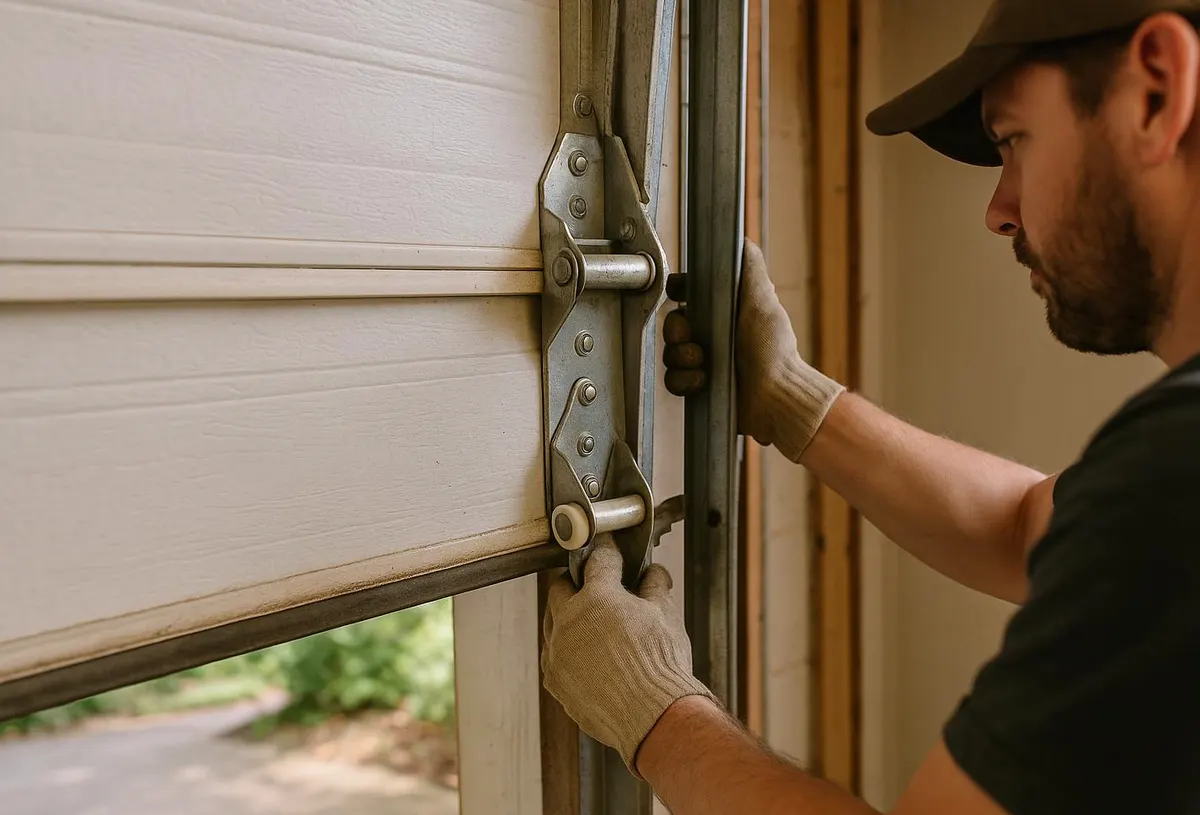
- Lubricate the hinges. Apply lithium grease or silicone spray directly to each hinge pin where it pivots. A thin, even coat is enough — work the door up and down a few inches by hand to let it work in.
- Lubricate steel rollers only. If your rollers have ball bearings, apply lubricant to the bearing area, not the wheel surface. If you have nylon rollers, skip the grease entirely — they're self-lubricating, and oil just attracts grit that wears down the nylon faster.
- Lightly coat the springs. A light misting of silicone lubricant helps torsion springs resist the rust that Gainesville's moisture encourages. Don't overdo it — a heavy coat just drips and collects dust.
- Do not lubricate the tracks themselves. Tracks should be cleaned, not greased. Lubricant on the track surface attracts debris and can actually make the rollers slip.
- Lubricate the opener's drive mechanism. For chain-drive openers, apply a small amount of lubricant along the chain. Belt-drive and screw-drive units need a specific lubricant made for that mechanism — check your opener's manual.
- Reconnect the opener and test. Run the door through a full open-close cycle. Listen for any remaining grinding or squeaking, which usually points to a part that needs more than lubrication.
- Wipe off excess. Any lubricant left sitting on the surface just collects dust and pollen. A clean pass with a rag finishes the job.
Products to Avoid
Skip WD-40 and similar all-purpose sprays — they're solvents designed to loosen and clean, not lubricate long-term, and they evaporate fast, leaving parts dry again within days. Avoid standard motor oil too; it's too thin, drips onto the garage floor, and attracts dirt in the humid air. Stick with lubricants made specifically for garage door hardware.
Where DIY Ends and a Technician Starts
Lubrication is homeowner territory. Torsion springs under tension are not. If you notice a spring that's visibly stretched, rusted through, or making a popping sound, step back and call for service rather than adjusting or lubricating it yourself. The same goes for openers that still grind after a proper lubrication pass — that usually points to internal gear wear that needs diagnosis, not more grease.
When to Call Gainesville Garage Door
If your door still binds, sags, or makes noise after a full maintenance pass, or if you spot rust and wear on a spring, it's time to bring in a technician. Our garage door maintenance visits cover a full hardware inspection along with proper lubrication, and if a spring shows signs of failure, our spring replacement service handles it safely before it becomes an emergency. Give Gainesville Garage Door a call — we serve homeowners across Gainesville, Alachua, Newberry, High Springs, Archer, Micanopy, Hawthorne, and Waldo, and we're ready to help keep your door running quietly through every Florida season.